Eclipse

Eclipse is a high-octane FPS speedrunning game where you’ll have to kill the enemies and escape as fast as you can.

In Eclipse’s world, demons have prevailed and the Iron Dominion rules all. An eternal night coats the land and nothing dares to grow. The rivers have frozen over and even the wind dares not blow. However, there are few who still live in defiance.

  • Platform: PC 
  • Engine: Unity
  • Playtime: 15 minutes
  • Team Size: 19
  • Roles: Narrative and sound design
  • Timeframe: 4 weeks
  • Download Here
The game Pitch

Eclipse is a first-person speedrunning game where you have to complete a level as fast as you can. The core loop is about learning how to traverse the level and optimize your route. The game takes inspiration from games like I Am Your Beast, Neon White, and Doom (2016).

 
My Responsibilities
  • Creating and maintaining the narrative of the game and its surrounding world.
  • Writing combat barks for the Daggerblade companion.
  • Working closely with artists, animators, and musicians to ensure a consistent aesthetic.
  • Tracking, mixing, recording, and implementing VO and SFX.
  • Creating slides for Alpha, Beta, and Gold Build presentations.
Table of Contents

Narrative Design

The game pitch for Eclipse was a medieval fantasy version of I Am Your Beast which meant that the narrative of the game had to be punchy and immediately evocative. We knew that most of our target audience wasn’t going to be coming to the game for a deep exploration of the human psyche.

That being said, I definitely did not shy away from putting bits of my own more existential inspirations into the game.

My Work

Narrative Document

For my narrative design work I started by brainstorming and pitching a few different broad ideas for the setting and getting feedback from my team. This resulted in a narrative document that evolved a lot throughout the project.

After we agreed on a setting, I further refined and got more feedback on the details of characters and the core plot. More time and feedback would definitely have been useful, but unfortunately the 4 week time limit meant we had to move on to production.

Scene Beats

Once I had established the setting and characters I began planning out and writing two scenes, one to play before and  one after the level. My goal with these scenes was to provide a bit more personality and world building for players that were interested in it.

Like the initial narrative document, the scenes could definitely have used more time to cook and refine, but we had to record the voice lines and implement them, so we really only got the chance for a single round of refining.

NPC Barks

Alongside the scenes, I also had to figure out the combat barks that the Daggerblade would shout out during the fight. This included both the actual writing as well as establishing what actions in the game would trigger the dialogues.

The list of barks started quite large, but after testing with placeholders, we realized that it was just far too much chatting from the dagger, and we rolled it back a lot.

Working with other disciplines
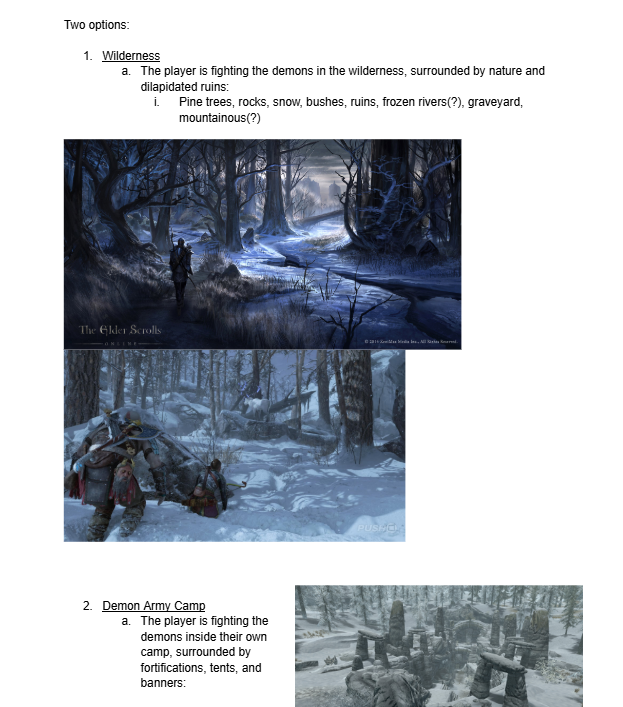
A screenshot from sharing world inspiration with artists

Some of my favorite work that I got to do on Eclipse was interacting with the various artistic disciplines on the team and maintaining the vision of the project.

Early in the project the artists and I spent time gathering references, and finding ideas that resonated with our vision of the game. The two musicians on our team provided plenty of early drafts to find the vibe and eagerly asked for feedback. This excitement from both my side and the artists’ side made collaboration really easy and fun.

In the final week a lot of my work in narrative had dried up, and we focused just on polishing the game. There were plenty of bugs with the Scene Beats or NPC barks but I also spent a lot of time jumping into calls with artists who were putting the last details on animations and props.

Sound Design

Working on sound design for this project was incredibly fun. We were very lucky to get to use our school’s on-site sound studio to record lines of dialogue and lots of death groans for the player character.

Sound Effects and Voice Acting
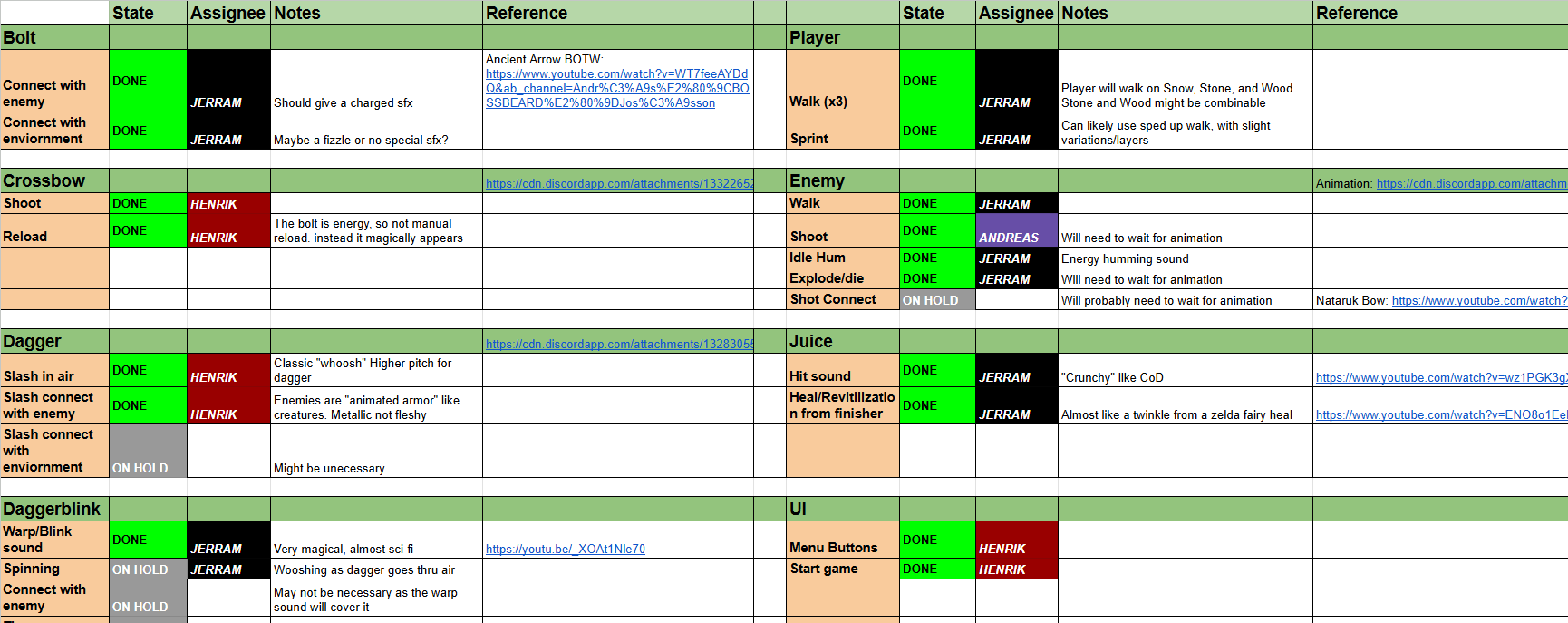
SFX Spreadsheet
SFX Spreadsheet

I was responsible for mixing and keeping track of SFX and VA. I also led the recording and direction of VA and voiced the player character The Rebel. We used a relatively simple spreadsheet for tracking. It worked well because it was very dynamic, flexible, and consistently updated by myself and the musicians.

Because we didn’t have access to professional actors, our QA member and myself played the roles. We had a lot of fun playing the characters but it took some time to get the voices right. We had to record lines a couple times because I didn’t know what made a recording good or bad.

Takeaways

Eclipse ended up as a fantastic game that I’m incredibly proud of. But beside the project culminating in a good product, it was also a great learning experience for me.

Early on in brainstorming I had a great conversation with a friend that helped frame this project for me. During it we came to the conclusion that while this game did need a narrative, it didn’t have room for a robust multi-act epic. I was disappointed at first but it was a great lesson and definitely helped the project as a whole.

I think that the writing could have definitely used a few more passes and more playtesting. While the NPC barks from the dagger ended up quite well, the cutscenes landed kind of flat and awkward. I struggled with finding the right balance between

  1. Explicitly explaining who the player character is and what they are doing
  2. Not rambling on and on
  3. Still feeling authentic and interesting.

Our playtest sessions did a great job ironing out kinks in the gameplay but we didn’t ever collect feedback on the story. This was a huge oversight and definitely would have helped.

Connect

Jerramgrumcarr@gmail.com