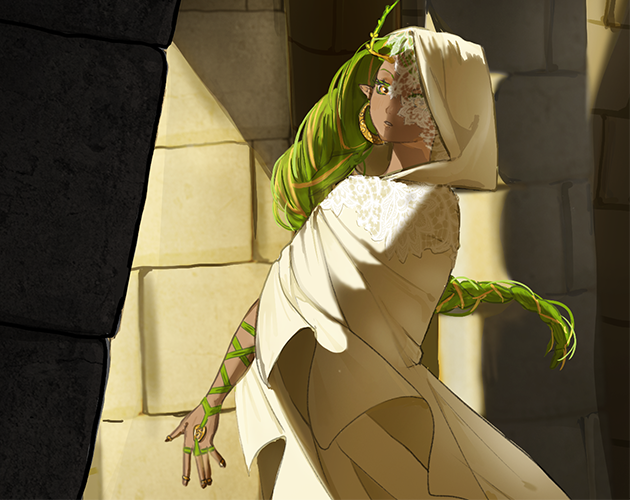
 The Last Branch is a beautiful adventure game, where you play as a child of the Godtree, the last hope for life. Explore an ancient abandoned temple, and meet the many lost spirits, lingering in its halls. Repel the infestation of Rot and escape from the temple to restore life to the world!
- Platform: PC
- Engine: Unreal
- Playtime: 15-30 minutes
- Team Size: 14
- Roles: Narrative & Sound Design
- Timeframe: 7 weeks
- Download Here
World Building
Goals
As we were making a narrative game, we knew that the setting had to be especially clear and communicable to the rest of the team. We also wanted to reflect the prompt “Environment” which was given to us for the project from our school.
Implementation
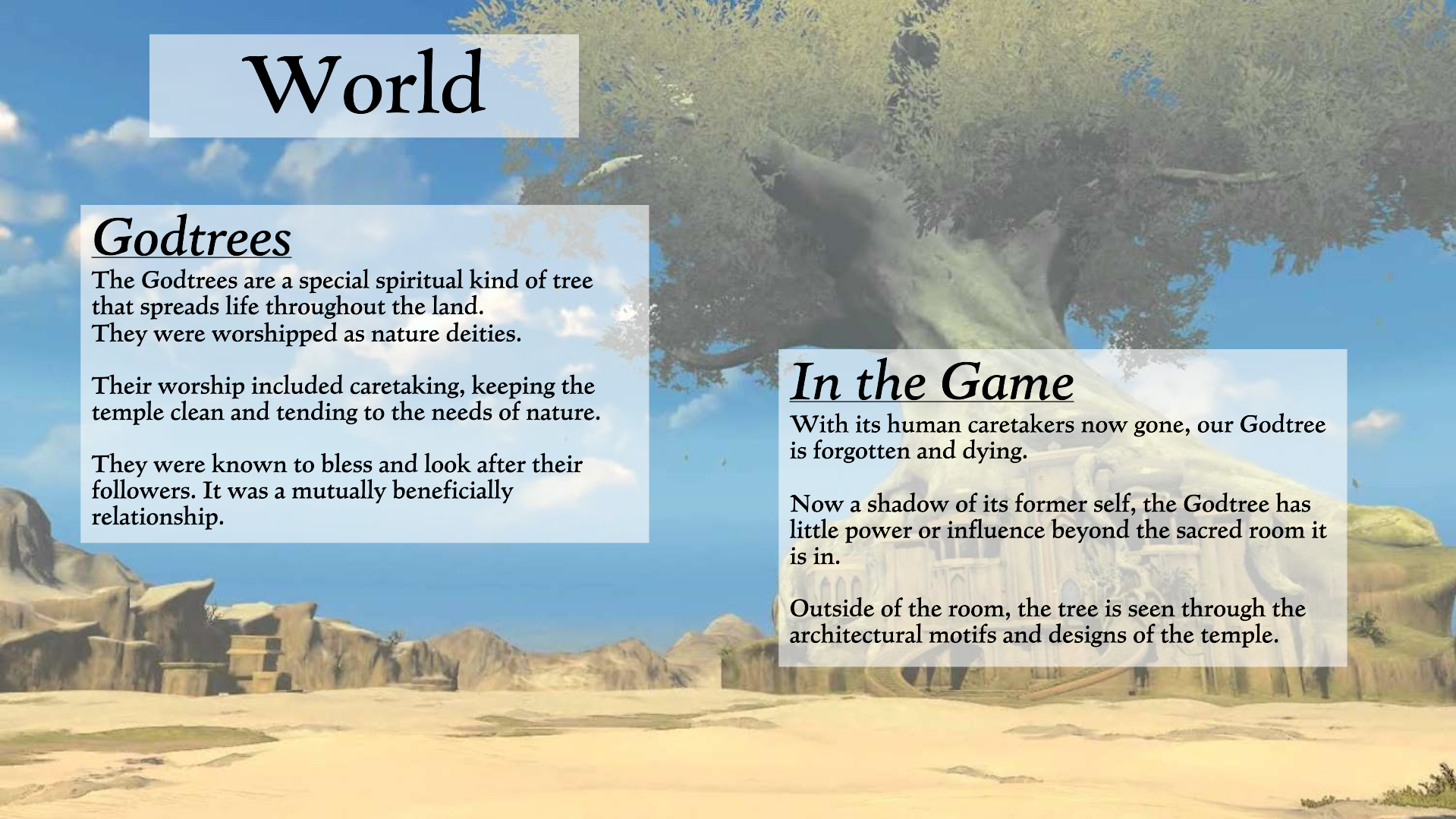
To ensure the whole team could get on board with the vision, we spent time formatting all of our work into shareable powerpoints that were easy to digest.
The setting we used was a post-apocalyptic world, taking inspiration from Prince of Persia (2008) and Nausicaä of the Valley of the Wind.
One of the details we spent notable time on was the cause of the apocalypse, a malevolent Rot. We discussed a lot about whether the Rot was strictly evil or more a part of natural cycles. And while this level of nuance at the time felt frustrating, it was an important distinction to make for the whole team’s sake.
Takeaways
In retrospect it is so clear how valuable having a concise definition of in game ideas is. The definition of the Rot was impactful in many ways, from detailing how the enemies would look and move, to how they would behave during stealth sections.
Spirit Dialogue
Goals
With our main narrative device we wanted to offer downtime for the player to contrast against the exploration in the core gameplay loop. We also wanted to leave space for the players who were more interested in the mechanical gameplay than the narrative and world building, so it was also important we didn’t force feed the story.
We also needed some way to contextualize tutorialization inside the world. Because consistent immersion in the world was a core value of our game, just having pop-up tutorial information about mechanics felt jarring.
Implementation
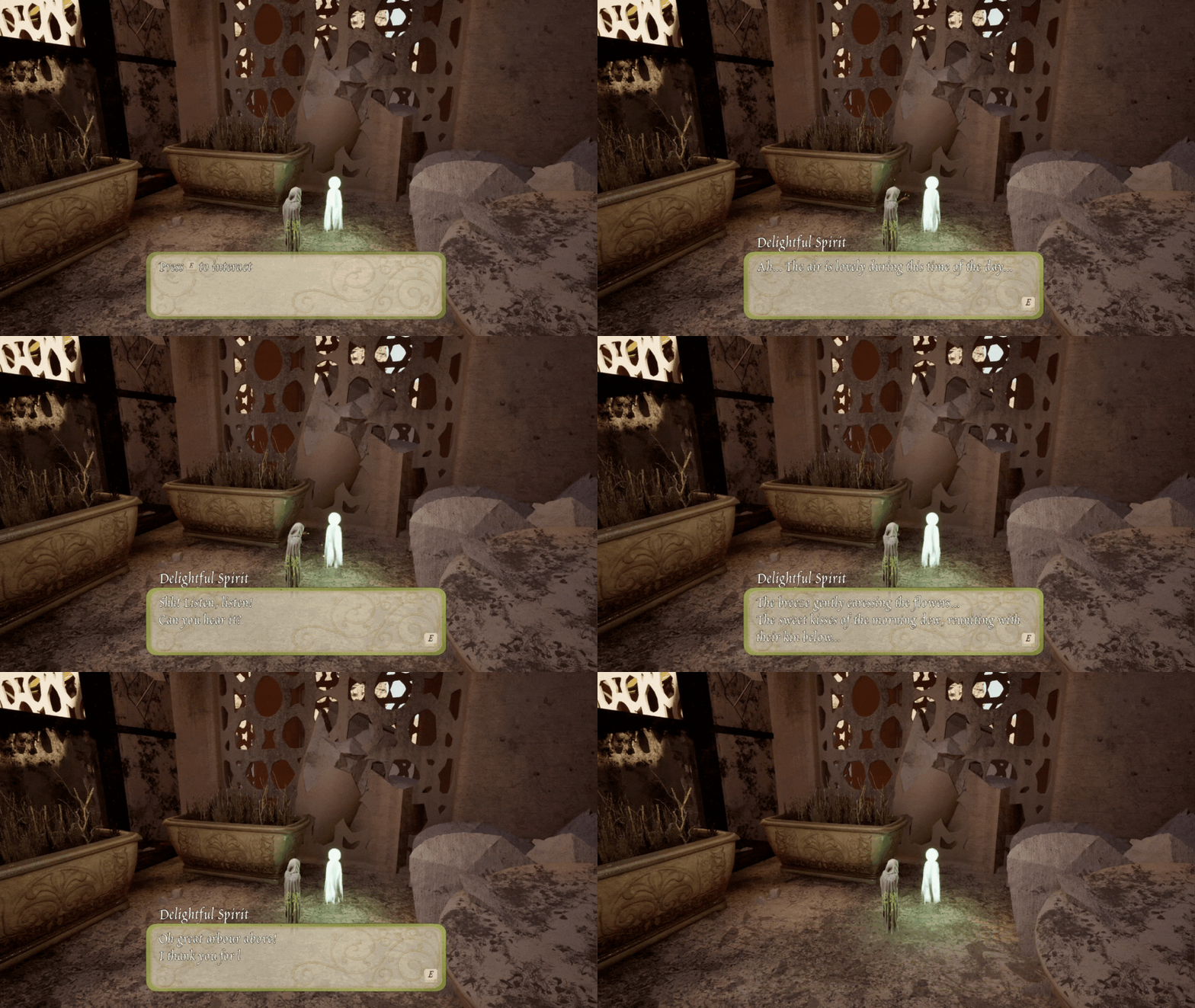
We chose to use NPC spirits that we placed around the temple. The player is able to interact with them, hearing what they have to say. We strategically placed spirits with tutorial information along the Golden Path and placed more flavorful spirits in nooks and side areas to reward exploration.
Though I was not responsible for writing the dialogue, I did provide feedback and notes on it. I helped create the initial plan and layout for how many and what kinds of spirits we wanted. It was important to keep good track of each spirit, because we aimed to make them reflective of their surroundings.
Takeaways
The biggest lesson I learned from working with the dialogue and NPCs is to not try and be so clever. I forget that as writers we’re “5th dimensional beings that can see the whole story,” so to speak, and that players need more help. I think, while our ideas and goals were very solid, our execution of actually translating those ideas into experiences for the player got muddied by vagueness and being afraid of giving too much away.
Working with Level Design
Goals
From a narrative perspective, our goal with the level was to use it as a microcosm of the bigger world story. In each section we wanted everything, NPCs, art direction, and gameplay mechanics, to match a tone and be able to tell a story through subtler methods than dialogue.
Implementation
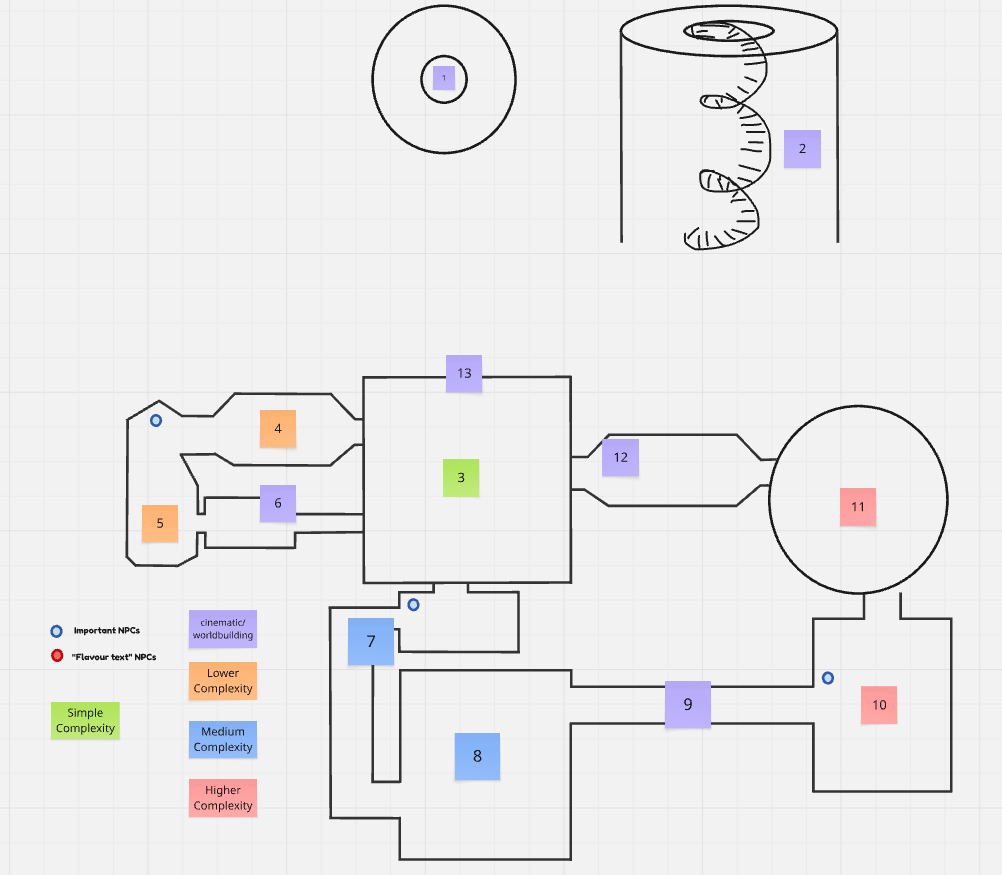
To do this we designed three distinct sections that would reflect the Past, Present, and Future of the world. We worked closely alongside our level designer, Jules, to help plan out the beats of the game.
I was part of the process from the beginning, with brainstorming ideas for rooms and the flow of the game, all the way up to the finishing touches, making sure the proper emotions were evoked in each area.
After each area got a pass, Jules would share the updates with me and we’d chat about how it fit in or ways we could adjust it to better capture the targeted experience.
Takeaways
The biggest takeaway from working with level design on this project was learning the value of having backups in case content has to be cut.
Our themes for the sections were predicated on the fact that we would have three complete sections. However, when the team realized our level was overscoped and we had to cut back, that meant that suddenly the dream we had for narrative cohesion (of Past, Present, and Future) fell apart.
Working with Artists
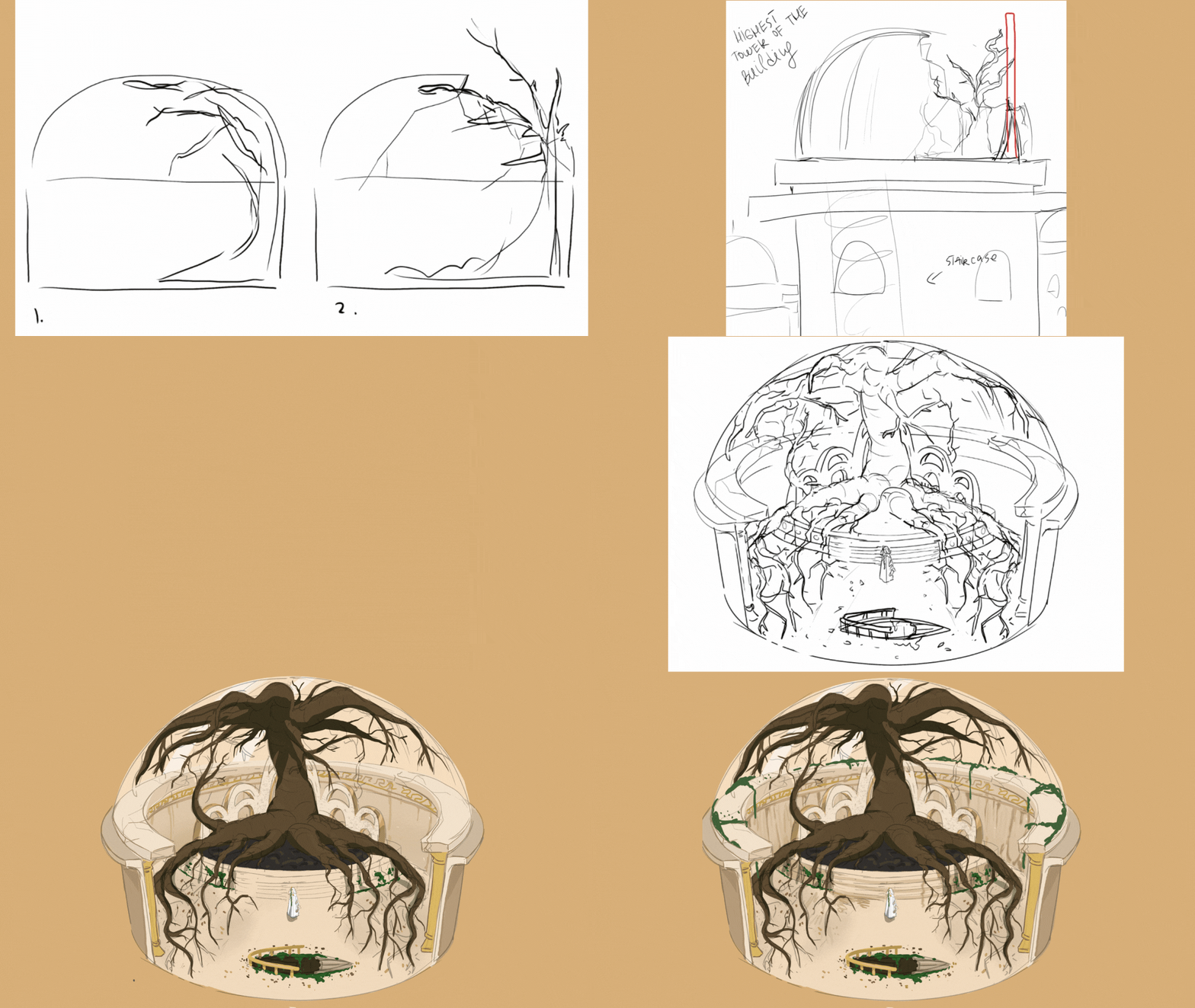
Another huge chunk of my work was communicating with the art team and helping them create assets that fit the tone of the world. I would share reference games, images, and descriptions of the different rooms, architecture, and props we imagined in the temple. It wasn’t one-sided though, as lots of fantastic ideas came from the art team and we were able to incorporate them into the narrative.
Some of my favorite interactions with the artists was getting to work with our concept artist Kate. Her art’s impact on communicating the game vision can not be understated. As a narrative designer I spent a lot of time going back and forth with her slowly refining our ideas.